
Focused products
See the workflow before discussing the scope.
Compare ATW Accounting with focused Labs previews for hardware, construction, medical, property, payroll, and governed AI work.
Browse all productsBuilt for Trinidad & Tobago
ATW Business Suite brings CRM, booking, invoicing, payments, accounting, and reporting into one practical workflow for your business.

Choose your path
Choose Business Suite for the connected customer and accounting journey. Explore ATW Labs previews when your operation needs a more specialised workflow.
Focused products
Compare ATW Accounting with focused Labs previews for hardware, construction, medical, property, payroll, and governed AI work.
Browse all productsConnected platform
CRM, WhatsApp follow-up, booking, invoicing, payments, accounting, and reporting stay in one practical workflow.
Explore Business SuiteFocused software
ATW Accounting anchors Business Suite. Six ATW Labs previews show how specialist operations could work before scope and availability are confirmed with you.
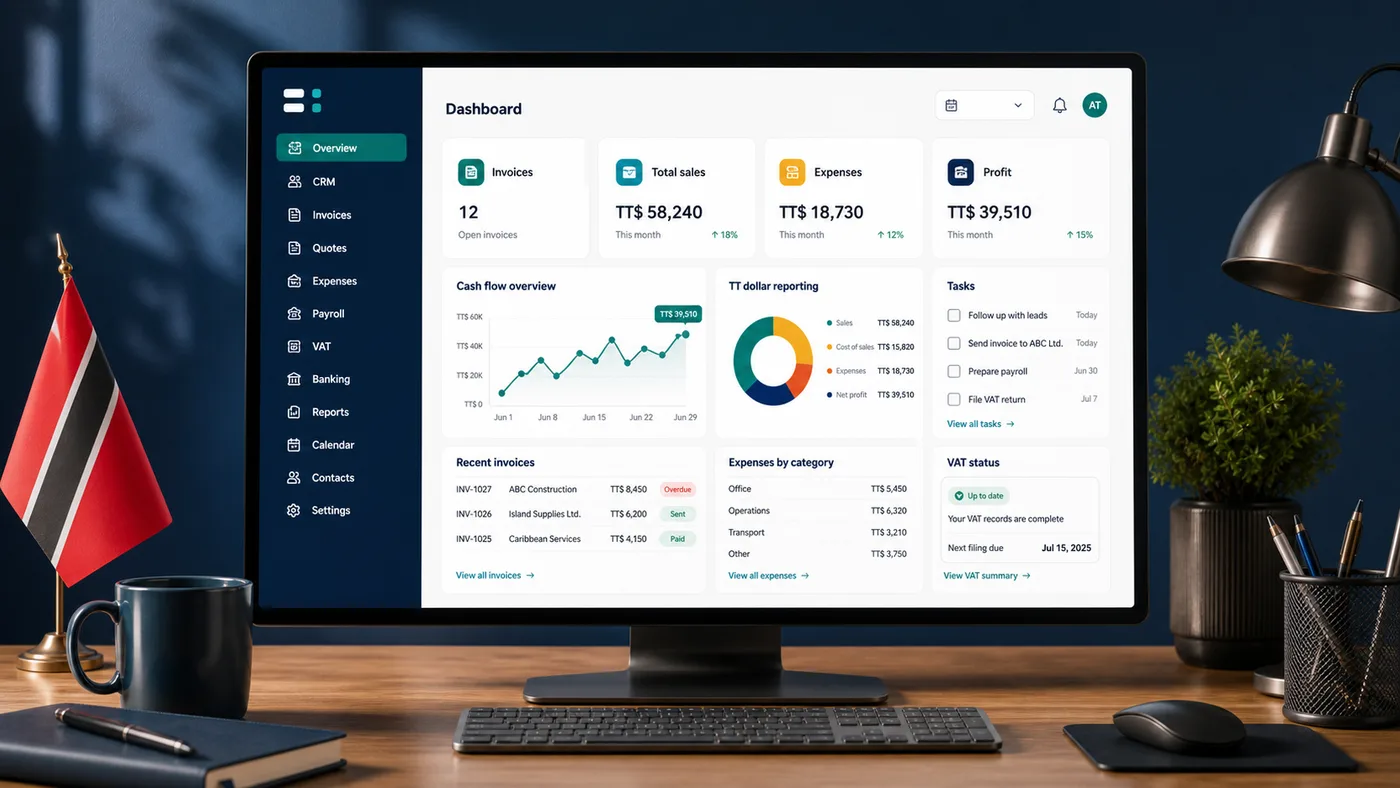
Keep customers, invoices, VAT-ready records, payroll records, and reports together in the flagship Business Suite workflow.
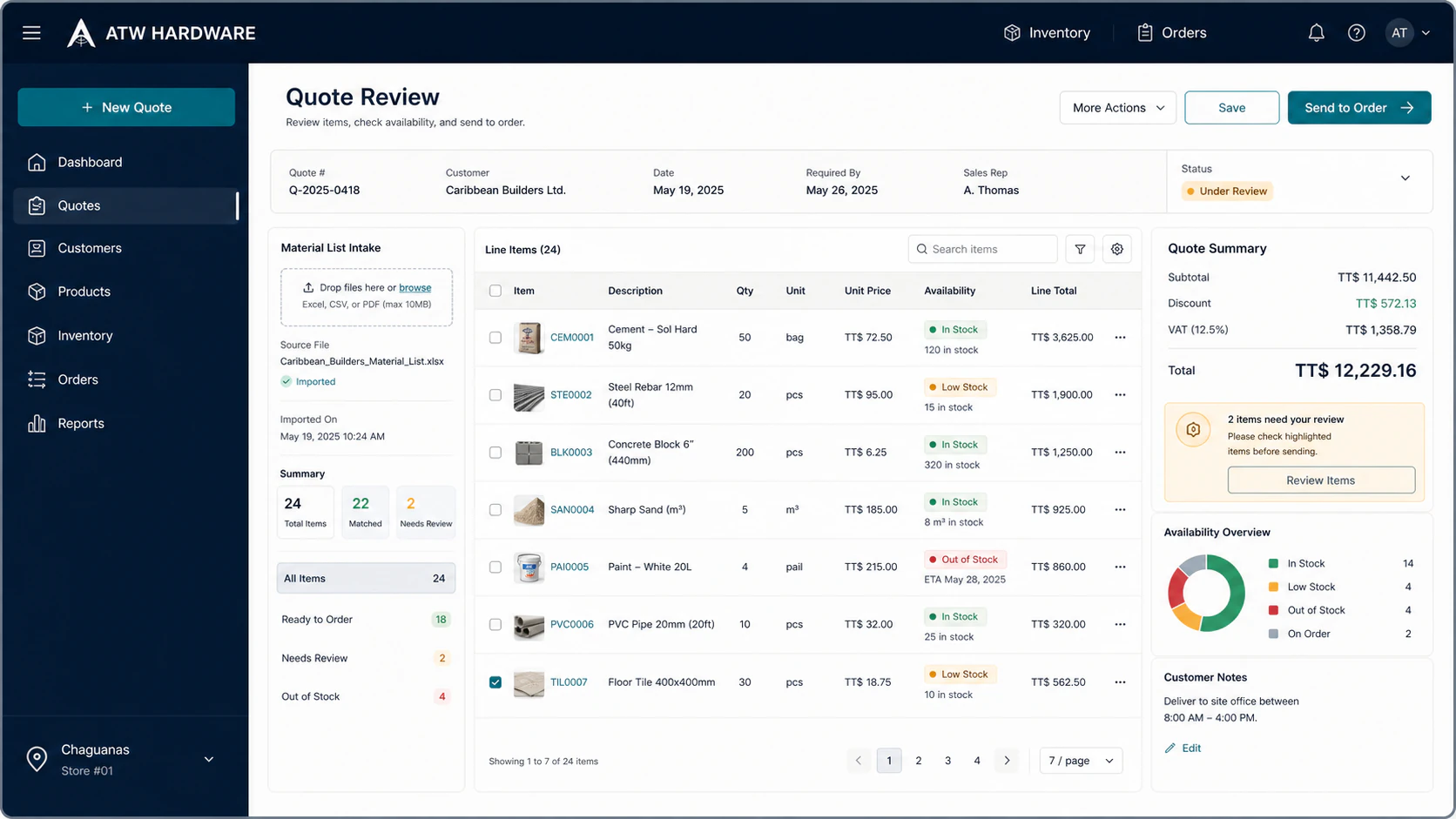
Turn a customer’s material list into a human-reviewed quote, order, invoice, and receipt trail using fictional sample records.
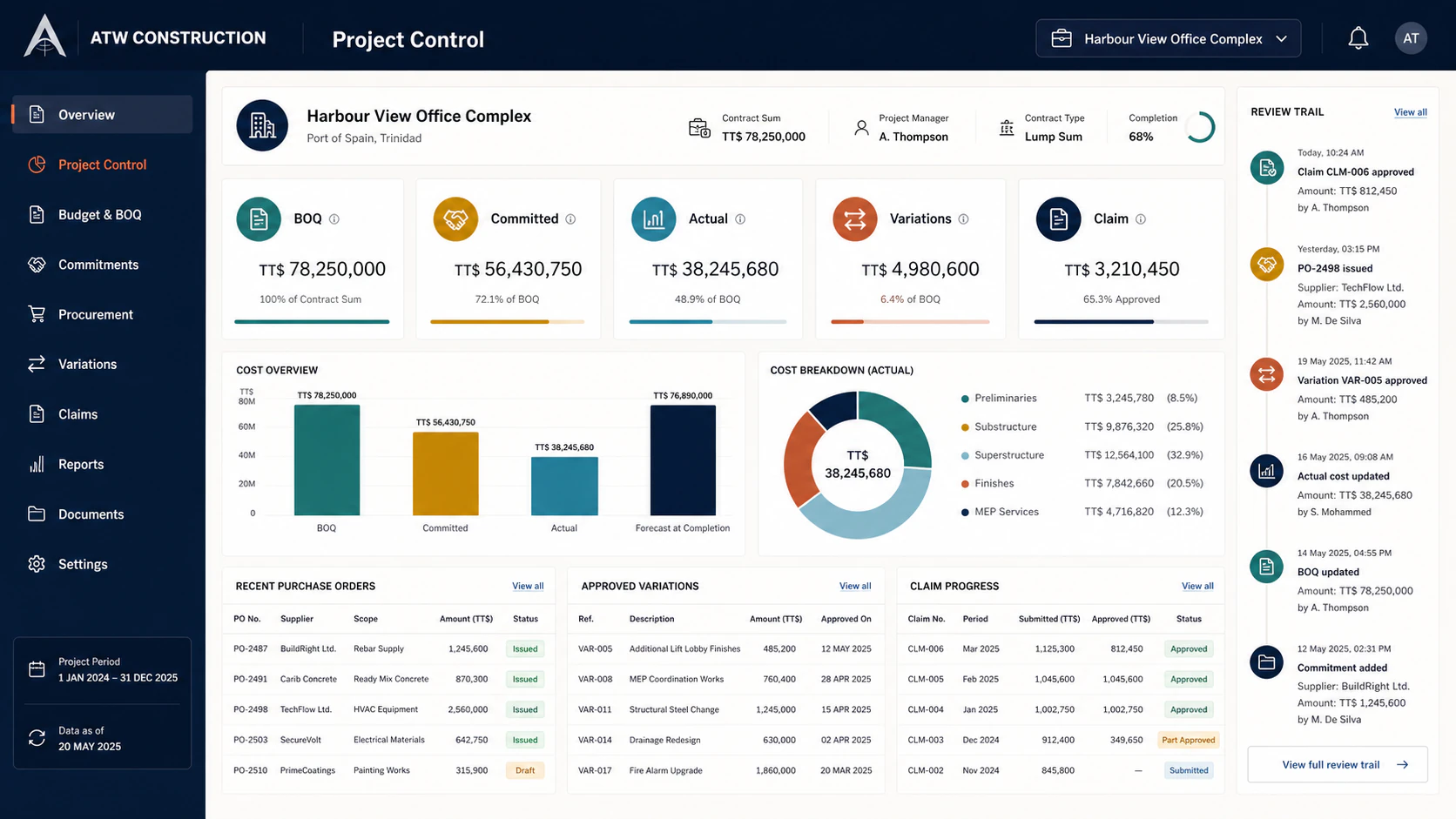
Connect the BOQ, purchasing, recorded cost, job costing, variations, and claim preview in a synthetic project workflow.
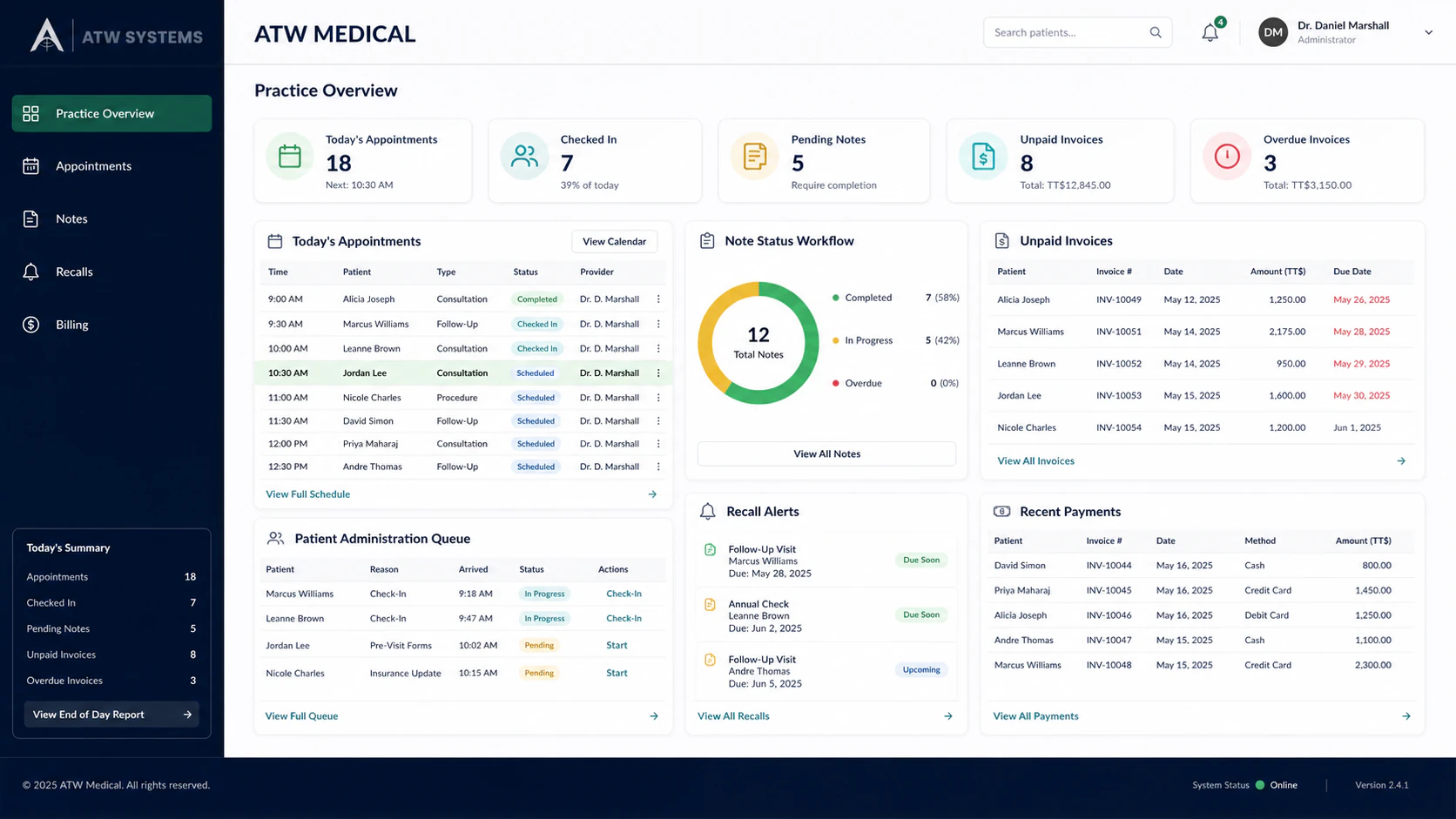
Follow invented patient administration from appointment to locked note, billing record, and recall review.
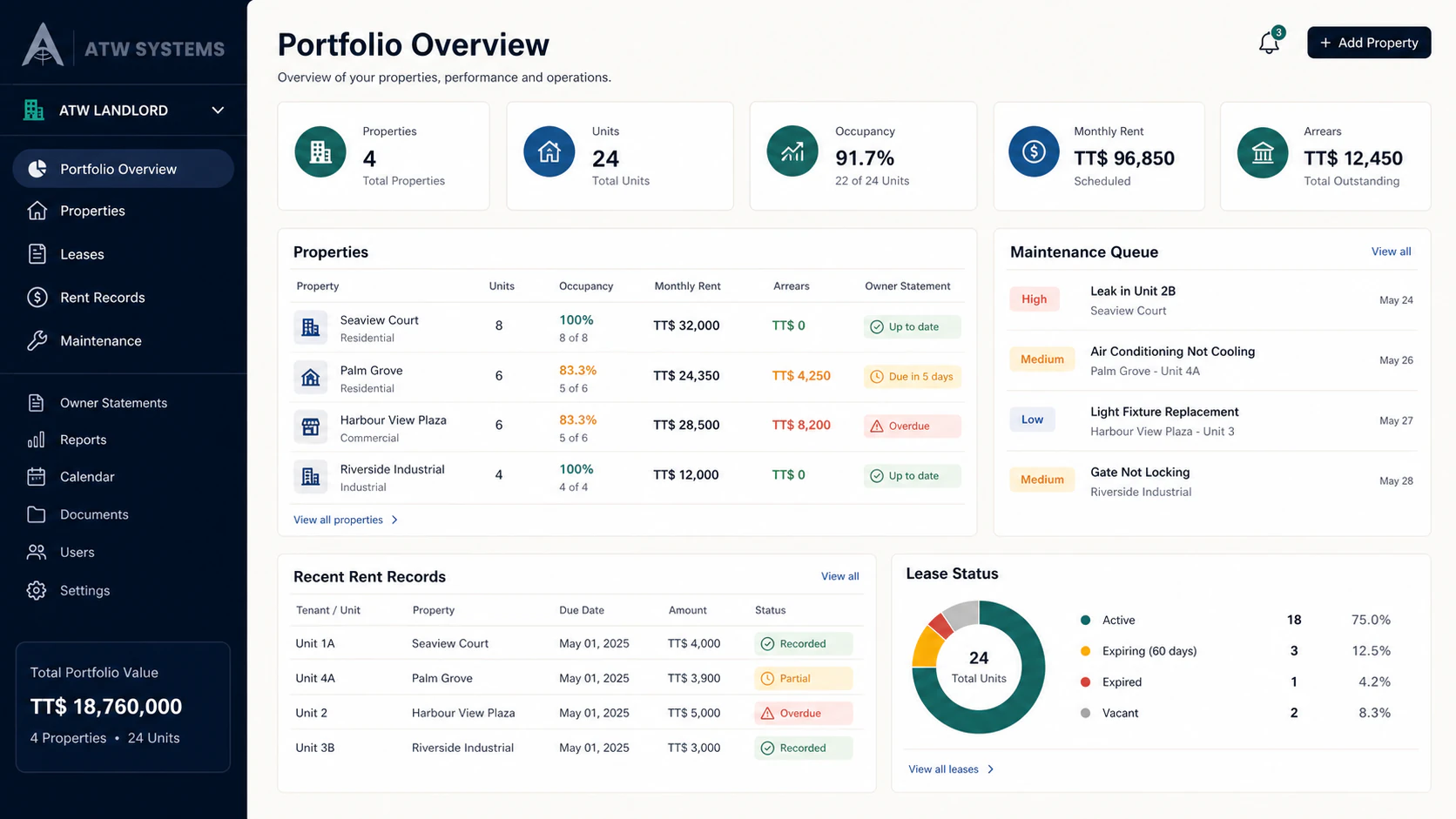
Organize fictional properties, leases, manual rent records, maintenance, and owner statements.
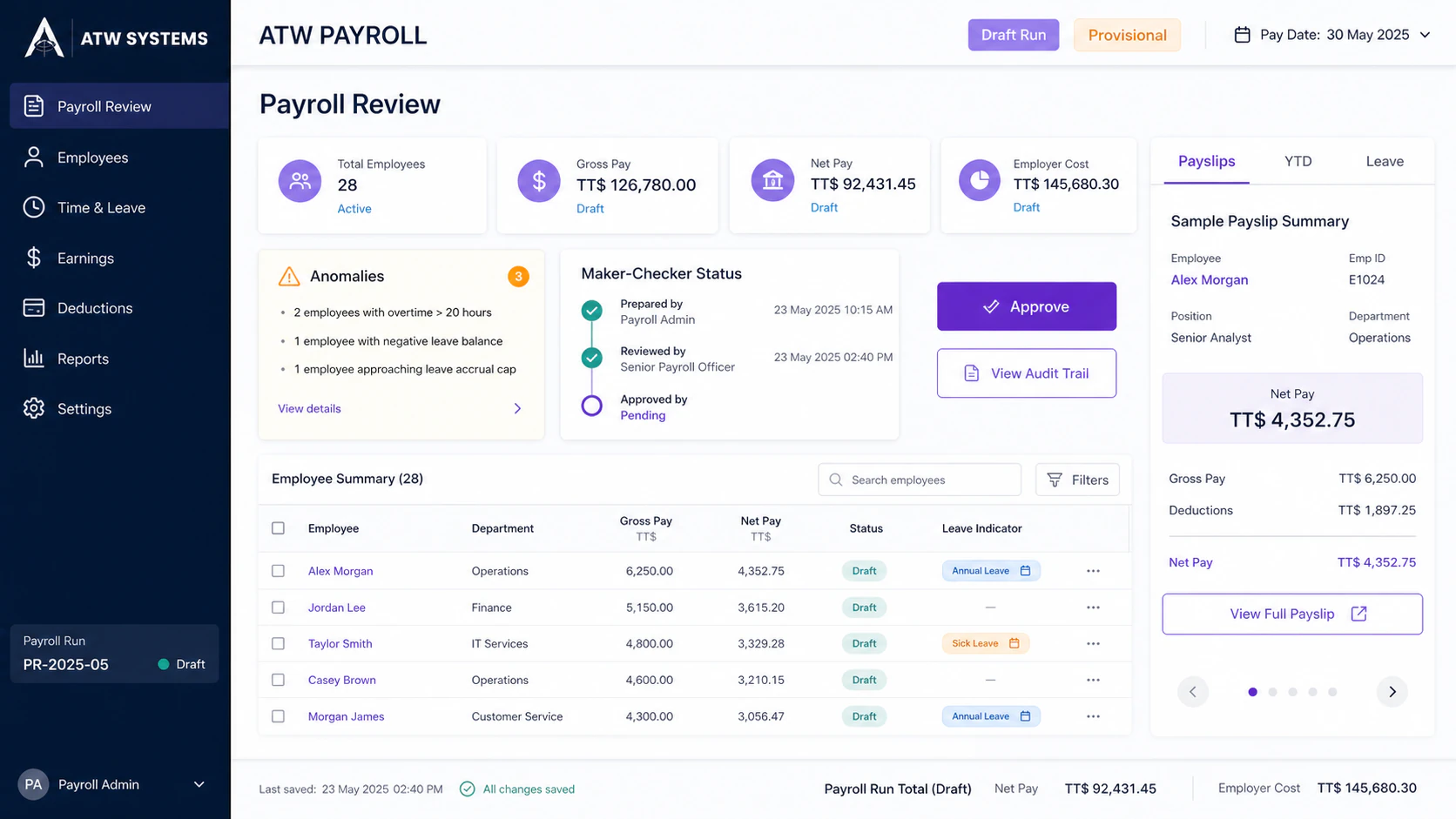
Prepare, calculate, review, separately approve, and close a synthetic payroll run.
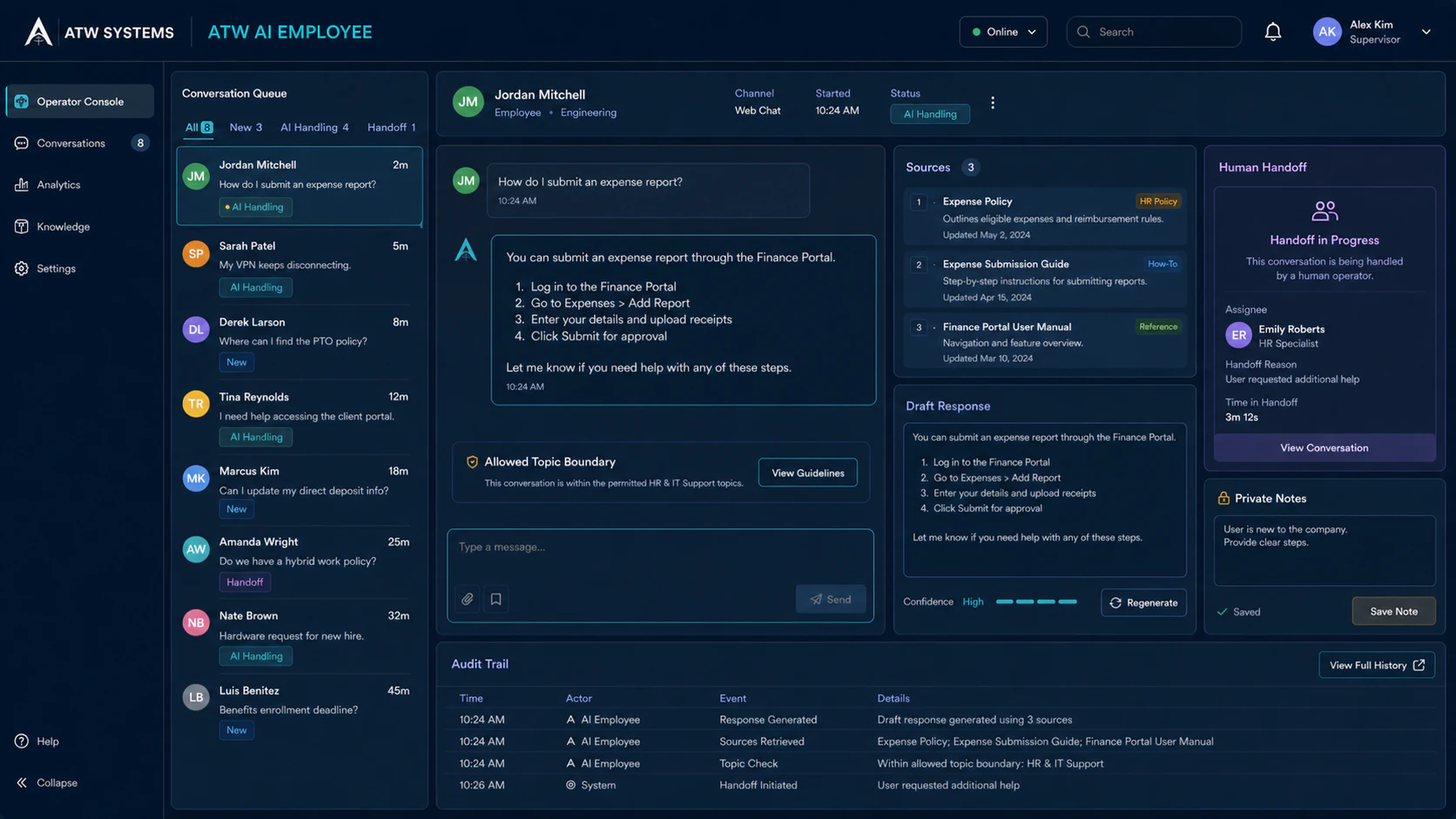
Explore staged topic settings, source associations, handoff states, and operator review in a local synthetic interface.
ATW Accounting is the financial core of Business Suite. The six ATW Labs pages are exploratory previews, not promises of ready-to-use software. Production scope and availability are confirmed in writing.
Compare the product familyATW Business Suite
CRM, WhatsApp follow-up, booking, invoicing, payments, expenses, payroll records, and reports stay connected around the customer.
Choose your next step
Explore Business Suite, compare the focused product workflows, or ask ATW which route best fits the way your team works today.